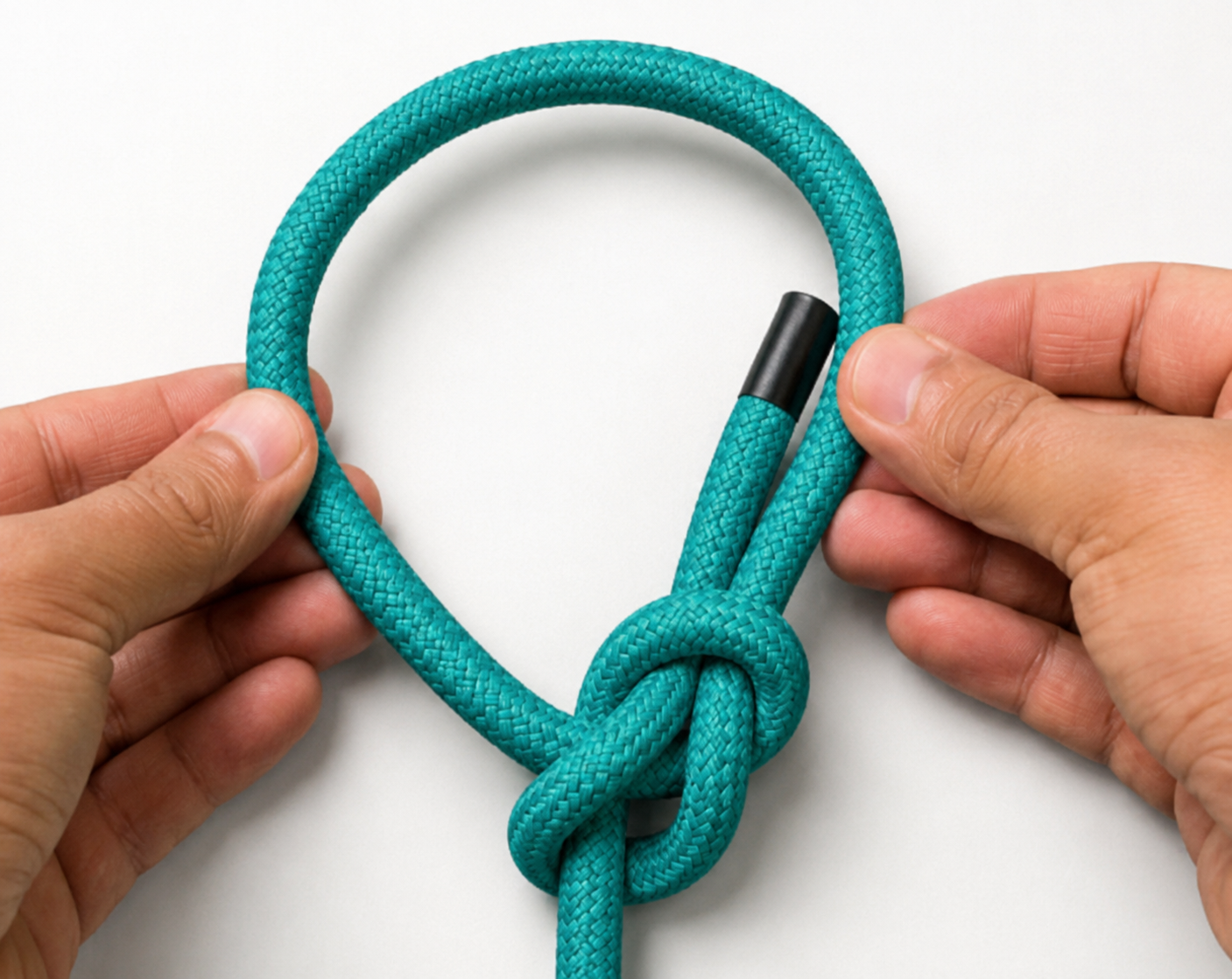
Choose, tie and inspect
Forty-two reviewed guides combine selection advice with written tying sequences, inspection checks, common mistakes and material notes.
Organized by job
Grouped the way riggers group them — loops, hitches, bends, stoppers, fishing, decorative, ropework — by what the knot does, not the hobby it belongs to.
Safety
Knots are load-bearing equipment. Where failure could hurt someone — climbing, towing, lifting, vehicle loads — learn from a qualified instructor and test before you trust.
About KnotStyle
KnotStyle is an independent field guide to the knots that earn their place on a rope. We explain what each knot is good at, where it fails, which knot to reach for instead, and how to practice and inspect the cornerstone knots. External animations remain available as supporting references after the site's own guidance.
How knots are organized
We group knots the way riggers and sailors do — by what the knot does, not where you use it. Loops put a fixed eye in a rope. Hitches attach a rope to an object like a post, rail or another rope. Bends join two rope ends together. Stoppers bulk up a rope end so it can't slip through a hole or block. Fishing knots are specialized for thin, slippery monofilament and braid, where ordinary rope knots fail. Decorative knots are tied for their looks, though several started life as working knots. Ropework covers the techniques beyond single knots — lashings that build structures from poles, splices that weave rope into permanent loops and joins, and whippings that finish rope ends properly.
How difficulty ratings work
Each knot carries a one-to-five coil rating. One coil means you can learn it in under a minute; five coils means you should expect several practice sessions before your hands remember it. Ratings reflect how hard the knot is to tie correctly and to inspect — a knot you can't verify at a glance is more dangerous than a hard one you can.
A word on safety
Knots are load-bearing equipment. A correctly chosen knot tied incorrectly can be worse than no knot at all, because it looks trustworthy. For any use where failure could damage property or hurt someone — climbing, towing, overhead lifting, securing loads on vehicles — learn from a qualified instructor and test everything before you trust it. The tutorial links on each card are excellent references, but they are not a substitute for hands-on training.
How external references are used
Written sequences, inspection notes, cautions and comparisons are published directly on KnotStyle. Independent animations from established educators remain at the end of knot guides as optional visual references and are clearly identified as external resources.